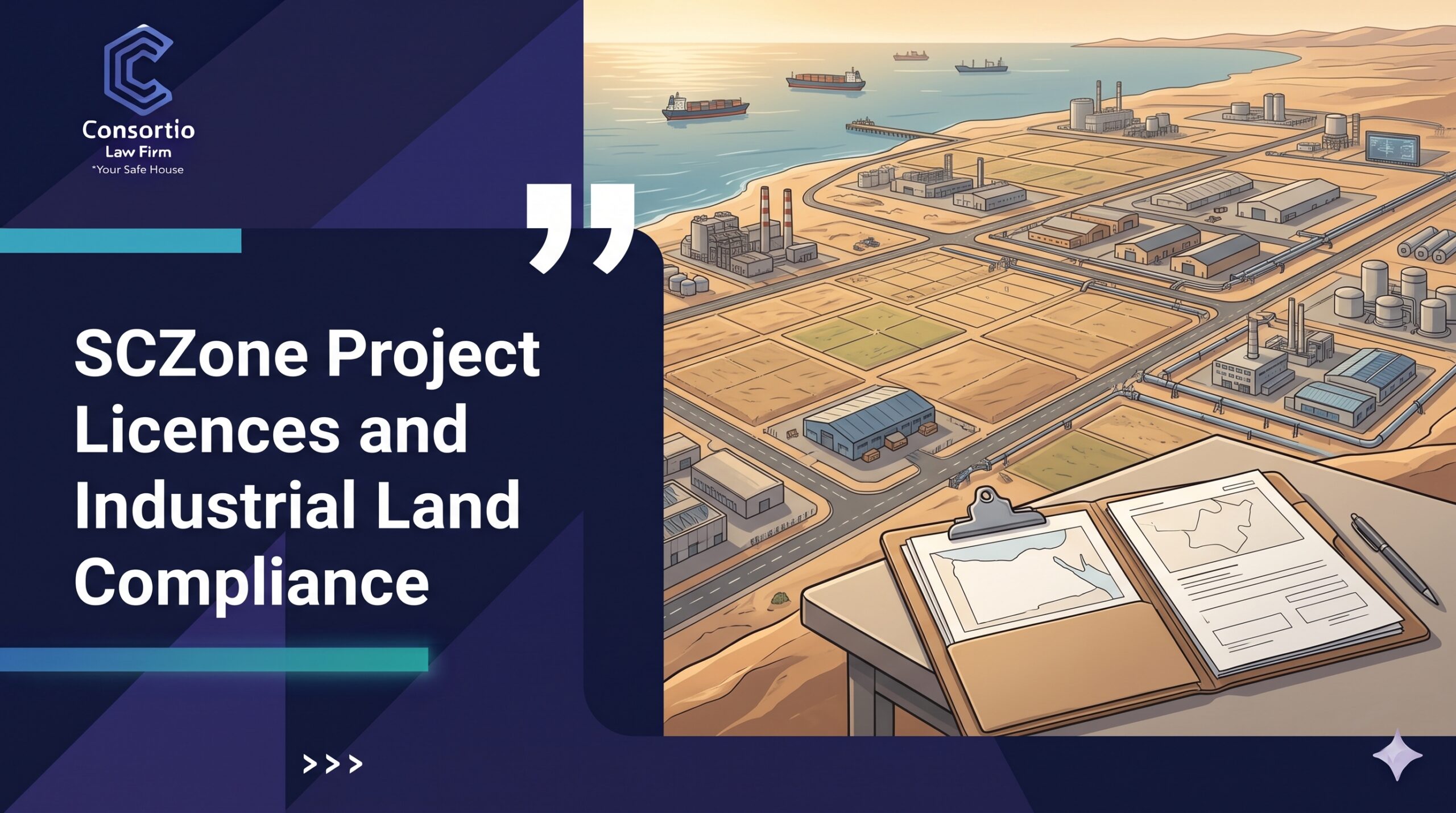
An international group approves a new production line in Egypt. Procurement orders the equipment, the local team starts planning installation, and legal receives the environmental file shortly before commissioning. The environmental impact assessment in Egypt may already be late: the relevant duty attaches before project implementation, rather than simply before the first commercial sale.
For companies entering Egypt or expanding an existing operation, the practical question is whether the approved project, the proposed works and the environmental submission describe the same activity. A group capital approval does not answer that question. The Egyptian approval file needs its own review before implementation proceeds.
Which projects need an environmental assessment
Article 19 of Environment Law No. 4 of 1994 requires public and private persons and entities to submit the environmental impact assessment for a covered establishment or project to the competent administrative or licensing authority before implementation. The Executive Regulations determine the establishments and projects within scope.
Articles 10 and 11 of the Executive Regulations, as amended by Prime Ministerial Decision No. 2466 of 2024, connect that obligation to the applicable establishment lists and activity guidance. Consequently, a company should confirm its project classification and required study against the applicable Egyptian framework. The fact that the group uses the same operating model elsewhere does not establish the Egyptian classification.
This matters for the sequence of a market-entry project. Entity formation, site selection and sector licensing each address different questions. The environmental workstream must be coordinated with the relevant industrial licensing requirements where the project is industrial.
An existing operation can trigger a new review
Article 23 of the Law subjects expansions and renewals of existing establishments to the assessment and related requirements in Articles 19–22. Therefore, an existing environmental approval should be checked against the actual change proposed.
The amended Article 19 of the Executive Regulations refers the definition of qualifying expansions and renewals to an implementing decision. Before determining the treatment of a proposed change, legal and engineering teams should check the definition in the implementing decision currently applicable to the project.
A practical change-control review should compare the approved activity with the planned production process, capacity, equipment, site and resulting pollution profile. Those are review questions, not a claim that every equipment replacement automatically requires a new assessment. The legal treatment depends on the applicable classification and the particular change.
The application must describe the operating reality
Article 12 of the amended Executive Regulations requires a complete project statement. Its contents extend to the pollution loads for which authorisation is sought, the elements of the self-monitoring system, climate effects and plans addressing those effects.
The study must be prepared by a person licensed to undertake the relevant environmental work. Both the applicant and the preparer bear responsibility for the data, information and documents within it. Appointing a consultant therefore does not remove the company’s need to validate its own operating assumptions.
Before submission, the project owner should bring engineering, operations, environmental specialists and legal together to resolve inconsistencies. Equipment specifications, process descriptions and projected emissions should match the project the company actually intends to implement. Keep a controlled version of the submitted package and a record of subsequent changes.
Build time for completion requests
The amended Article 10 of the Executive Regulations allows the Egyptian Environmental Affairs Agency to request additional data, designs or explanations. It also provides for the return of the study to the administrative authority if the requested information is not supplied within fifteen working days.
The review timetable consequently depends on a complete file and the handling of requests. It should not be treated as a guaranteed commissioning date. The Law and Regulations contain timing provisions whose application should be checked for the particular submission; a procurement schedule is a poor substitute for that legal analysis.
Article 20 of the Law also links the continuing effect of environmental approval to starting the project within the licensed period for commencing activity. A delayed project therefore needs a fresh check of its approval position before mobilisation resumes.
The exposure includes the operating licence
Under the amended Article 19 of the Executive Regulations, the competent or licensing authority may cancel the licence, or suspend its effect until environmental assessment procedures are completed, where the specified assessment requirements have not been met. This makes the environmental file a business-continuity issue.
For a regional legal team, the useful control is an explicit implementation checkpoint. Record the project classification, the submission package, authority responses, approval conditions and the person responsible for confirming readiness before work begins. Link that file to the group’s capital-project approval and change-control process.
What to check before the next commitment
- Confirm the activity and project classification with the appropriate Egyptian specialist.
- Compare the proposed works with the existing approved scope, if any.
- Verify the study preparer’s licence for the relevant environmental work.
- Reconcile operational data, pollution loads and the self-monitoring plan before submission.
- Assign an owner for authority requests and record response deadlines.
- Check approval conditions and activity-start validity before implementation.
Consortio can help the legal and project teams organise the Egyptian regulatory sequence and coordinate the legal review with the relevant technical specialists. The objective is a project file that supports an informed implementation decision and remains usable when the operation changes.
Legal basis: Environment Law No. 4 of 1994, Articles 19–23; Executive Regulations issued by Prime Ministerial Decision No. 338 of 1995, particularly Articles 10–12 and 19 as amended by Decision No. 2466 of 2024. Application depends on the project and the implementing decisions in force.