Is it easy to incorporate in Egypt? Yes.
Is it easy to become operational? That is a different story.
For foreign investors and General Counsels, the challenge of entering the Egyptian market is not the law—it is the process. While the Investment Law No. 72 of 2017 allows for 100% foreign ownership, the administrative path between “Signing the Statutes” and “Issuing the First Invoice” is filled with undocumented hurdles.
At Consortio Law Firm, we practice “Execution Reality.“ We do not just quote the statutes; we guide you through the security clearances, tax registrations, and banking compliance layers that determine your actual go-to-market timeline.
This is the definitive guide to establishing a secure, fully compliant corporate presence in Egypt.
1. Choosing Your Vehicle: LLC vs. Branch vs. RO
The first step is selecting a legal structure that minimizes liability for the parent company while maximizing operational freedom.
A. The Limited Liability Company (LLC / WLL)
This is the standard vehicle for 90% of Foreign Direct Investment (FDI) in Egypt.
-
Ownership: 100% foreign ownership is permitted (requires a minimum of 2 partners).
-
Liability: Limited to the capital shares. This creates a crucial “corporate veil” protecting the foreign parent entity.
-
Scope: Can trade, manufacture, service, and bid on contracts.
-
Management: Can be managed by a foreign director (Manager) without an Egyptian partner.
B. The Foreign Branch Office
A Branch is not a separate legal entity; it is an extension of the mother company.
-
Risk Warning: The parent company bears unlimited liability for the Branch’s debts in Egypt.
-
Requirement: You generally need an existing public or private contract (e.g., Construction, Oil & Gas) to register a Branch.
-
Tax: Subject to Corporate Income Tax + strict profit repatriation rules.
C. The Representative Office (RO)
Strictly for market research and study.
-
Restriction: An RO cannot issue invoices, sign commercial contracts, or generate revenue.
-
Purpose: Useful for hiring a local team to study the market before committing capital.
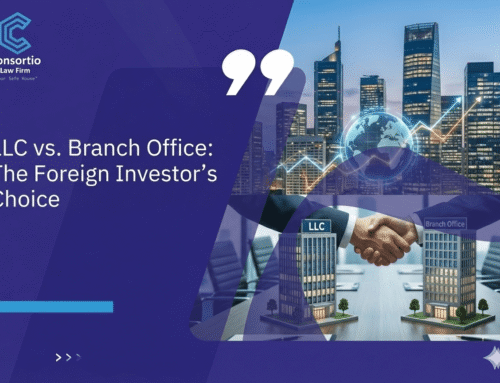
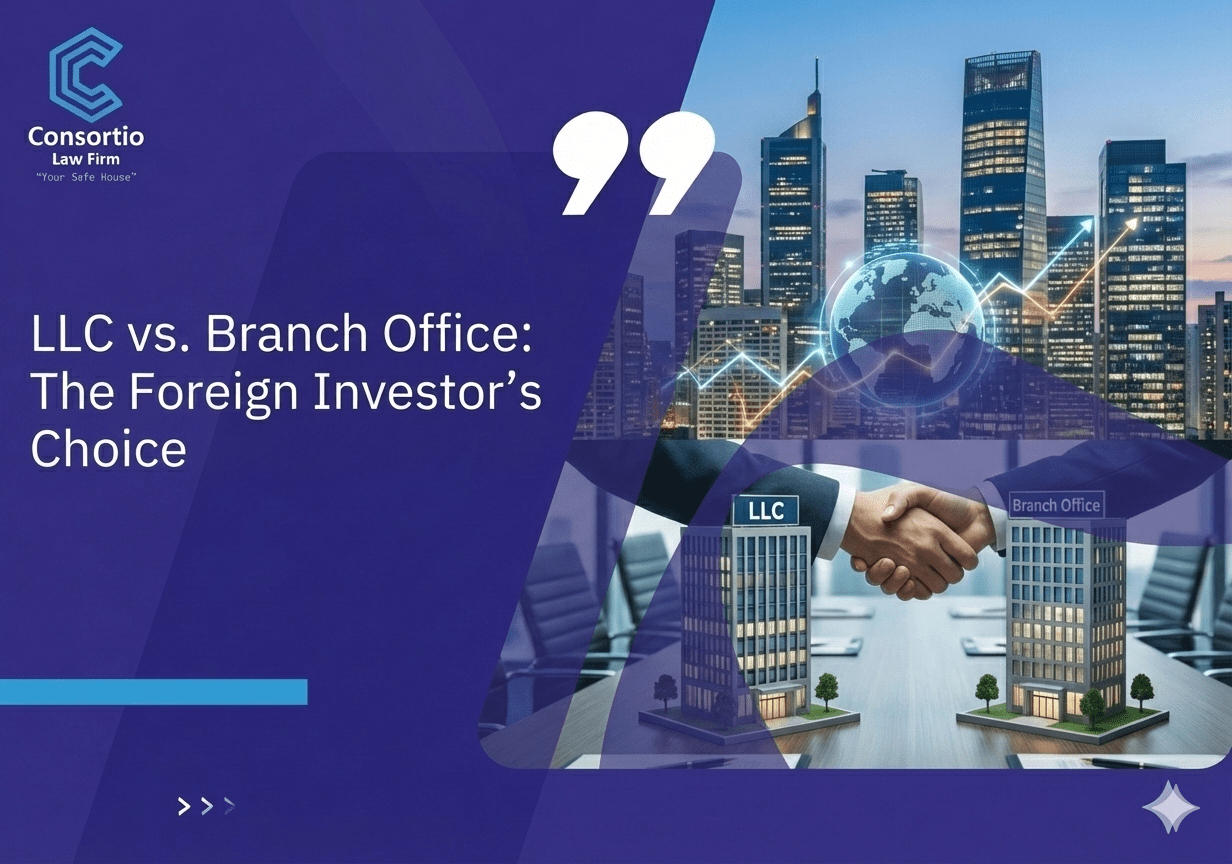
Strategic Note: Not sure which structure fits your tax strategy? Read our detailed comparison: [LLC vs. Branch Office: The Foreign Investor’s Choice].
2. The “Execution Reality” Roadmap: Timelines vs. Truth
Most service providers quote a “3-day Incorporation.” This is technically true but operationally misleading. Here is the real timeline.
| Stage | The Process | The Reality |
| Phase 1 | Security Clearance | Mandatory for foreign owners from specific jurisdictions. Can take 1-4 weeks and must be cleared before the gazette publication. |
| Phase 2 | GAFI Incorporation | Signing the Articles of Association and receiving the Commercial Register. Takes 3-5 business days. |
| Phase 3 | Tax & VAT | Issuing the Tax Card and registering for VAT. Mandatory before opening a bank account. 5-7 business days. |
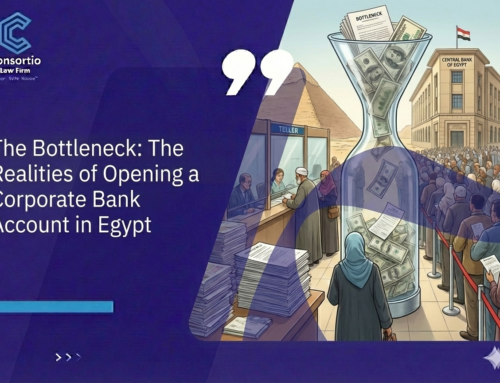
| Phase 4 | The Bank Account | The biggest bottleneck. Due to strict KYC (Know Your Customer) laws, opening a foreign corporate account takes 2-4 weeks. |
The Consortio Advantage: We run Phases 1 and 2 in parallel and have pre-vetted relationships with bank branches that understand foreign corporate structures, significantly reducing the “Phase 4” delay.
3. Minimum Capital & Financial Requirements
Does Egypt require minimum capital?
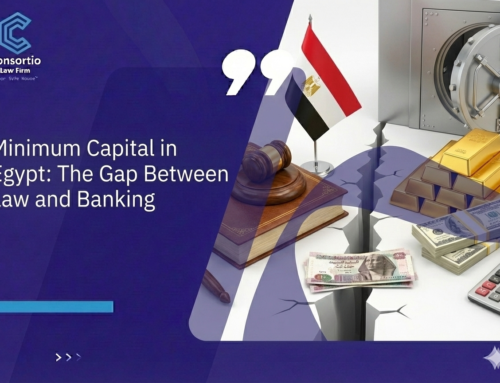
Legally, there is no minimum capital for a services LLC. However, we strongly advise depositing at least 50,000 EGP (approx. $1,000 USD).
-
Why? Banks often reject “Zero Capital” companies during the account opening process.
-
Trading Companies: If you plan to import goods for resale, the requirements change drastically. You must obtain an “Import License,” which requires a minimum capital of 5,000,000 EGP and (in some cases) 51% Egyptian ownership.
Planning to import goods? Avoid the 51% trap. Read our guide on: [Structuring Trading Entities & Import Licenses in Egypt].
4. Post-incorporation Compliance (The “Silent” Risks)
Obtaining your Commercial Register is not the end; it is the beginning. To maintain “Good Standing,” you must immediately address:
-
Electronic Invoicing (e-Invoice): Egypt has moved to a fully digital tax system. You cannot deduct expenses or issue legal invoices without registering on the ETA portal.
-
Employment Law: You must open a Employment Law file for the company and register the Manager.
-
Auditor Appointment: Every Egyptian LLC must appoint an auditor to submit annual financial statements.
5. FAQ: Common Questions from Foreign Investors
Can I be the sole owner of my company?
Technically, an LLC requires two partners. However, the second partner can be a subsidiary or a nominee holding 1% share, effectively giving you 100% control. Alternatively, you can form a “One-Person Company,” though strict capital rules apply.
Do I need a physical office?
Yes. You cannot incorporate without a lease contract for a commercial administrative premise. “Virtual Offices” are often rejected by the Tax Authority.
Can I repatriate my profits?
Yes. Egypt allows the full repatriation of profits and dividends, provided the company has paid its taxes and the bank has sufficient foreign currency availability.
Start Your Market Entry Correctly
Entering Egypt is a high-reward move, but it requires precise legal architecture. Do not rely on templates. Secure your capital with a firm that understands the ground reality.
Book a Market Entry Strategy Session:
WhatsApp: +201028806061