Last updated: 2026-02-07
Author: Karim Elsayed — Managing Partner, Consortio
Author bio: Karim Elsayed advises foreign investors on Egyptian market entry strategy, licensing pathways, and compliance-by-design, combining legal structuring with execution workflows (documentation, banking readiness, and operational compliance).
What is the best way for a foreign investor to enter the Egyptian market?
The best route depends on the business model: distributor, agent, franchise, licensing, joint venture, representative office, branch, or a local company. The correct route is the one that matches licensing rules, ownership limits (if any), and operational reality. Market Entry Strategy should come before incorporation to avoid restructuring later.
Can foreigners invest in Egypt in general?
Yes. Foreign investors can enter Egypt and operate through different legal frameworks depending on the activity and business model. The same investor can be unrestricted in one activity and restricted in another, so the right answer is always activity-specific.
Can a foreign investor own 100% of an Egyptian company?
In most activities, yes. However, some sectors impose ownership requirements (for example, majority Egyptian ownership in certain regulated trading activities), and other activities may be available under time-bound or conditional frameworks. Ownership is never assessed in isolation—it is assessed by the exact activity and licensing path.
Are any activities or areas restricted for foreign investors?
Yes, but restrictions are limited and highly specific. They commonly appear in certain land ownership categories (especially agricultural/desert land), certain regulated territories (including specific Sinai-related restrictions), and a small number of tightly controlled activities. In some cases, structured exceptions exist, so the practical outcome depends on the investor’s project and approvals path.
Do all activities require approvals before incorporation?
No. Some regulated activities may require pre-approval before the purpose clause can be finalized, while many businesses incorporate first and obtain operating licenses afterward. The correct sequence depends on the regulator, the activity, and the licensing model.
What is the difference between a representative office and a branch?
A representative office is for market research only and cannot conduct commercial operations. A branch is typically used to execute a defined contract or project and is often tied to that contract’s life cycle. If the investor wants open-ended operations, a local company is usually required.
When should a foreign investor choose a representative office (market study office)?
Choose it only when the goal is market research without revenue-generating activity. It can hire staff for research and administration and typically follows periodic reporting expectations. It is usually time-limited and later requires conversion if the investor begins operating commercially.
When should a foreign investor choose a branch?
Choose a branch when the foreign company is executing a specific contract or project in Egypt and needs a local execution vehicle. In practice, the branch’s continuation often depends on maintaining the contract basis through renewal or another qualifying project. For ongoing business operations, a local company is usually the correct structure.
When should a foreign investor incorporate a local company?
Incorporate a local company when the investor intends to operate continuously, hire staff, contract with customers and suppliers, and build a long-term presence. OPC and LLC are commonly used for operational flexibility. JSC is heavier in governance and compliance and may be mandatory for certain regulated licenses.
Why does the business model matter before incorporation?
Because it determines the licensing requirements, ownership rules, and which legal form is actually acceptable. Investors who incorporate without a defined model often discover they need a different structure (or ownership mix) to qualify for licensing. A proper Market Entry Strategy prevents building the wrong vehicle.
Does the commercial register activity need to match the real activity?
Yes, it should match as a best practice. Companies may list multiple activities while performing one main activity without issue. The real compliance risk arises when a company performs a licensed activity without obtaining the required license.
What documents are typically required to incorporate a foreign-owned company?
They usually fall into three groups: shareholder documents (including foreign corporate documents when applicable), representative/manager identity and security forms, and Egypt-based documents such as premises and statutory auditor appointment. Foreign corporate documents commonly require legalization steps before they can be used locally. Layered corporate ownership typically increases documentation needs due to UBO/KYC tracing.
Can foreigners incorporate using a Power of Attorney?
Yes. Foreign shareholders do not need to appear in person if the POA is properly drafted, legalized, and registered locally. The most common delays happen when POA scope is incomplete or legalization steps are not followed in the correct sequence.
Is a physical office required before incorporation?
Some activities require a physical office with specific standards (for example, certain pharmaceutical registration or tourism-related models). For many activities, a serviced/virtual office is possible if supported by a valid lease and a location that can pass practical verification procedures. The correct choice depends on the sector, licensing requirements, and inspection expectations.
Why is the statutory auditor required at incorporation?
The statutory auditor is a formal incorporation requirement and a continuing governance actor. The auditor supervises and certifies general assembly procedures, including attendance, voting, and documentation. An initial auditor can be changed later through the proper corporate resolution pathway.
What is security clearance and how can it affect incorporation?
Security forms are typically filed for foreign shareholders and, in some cases, for a foreign director. For many nationalities, the process proceeds without waiting for the final response, while certain cases may require prior approval. Accuracy is critical because incorrect data can lead to rejection, and rejection can force the rejected party to exit the ownership structure to avoid operational restrictions.
How do bank accounts work for foreign investors?
Some structures may require a temporary account to obtain a capital certificate, while others do not. Operational accounts are generally opened by the company’s director in person, and banks apply UBO/KYC checks. Layered corporate ownership increases the documentation needed to identify the ultimate beneficial owner.
How can profits be repatriated abroad?
Profit repatriation typically depends on proper financial statements, valid dividend approvals, and clean corporate governance. In practice, it involves coordination with standard clearing and banking procedures and the usual approvals path. Strong accounting and compliance hygiene makes repatriation routine; weak hygiene makes it slow.
What are the core tax obligations for a foreign-owned company?
A company typically completes tax registration and may register for VAT depending on its activity and turnover thresholds. It also handles corporate income tax on profits, payroll taxes for employees, and dividend-related tax treatment if distributions occur. The exact obligations vary by activity and operating model.
What are the social insurance obligations?
Social insurance registration is mandatory, and first-time file opening often requires the director’s personal attendance. Delays can trigger retroactive assessments and penalties. This step should be planned early in the setup timeline.
How long does incorporation usually take?
There is no fixed timeline because procedures and administrative backlogs change. Some tracks can accelerate commercial registration issuance but do not necessarily accelerate tax card issuance. A safe planning estimate is often around 15 working days for core incorporation outputs, with extensions depending on banking, POA legalization, security clearance, inspections, and seasonal working hours.
What are the two layers of compliance after incorporation?
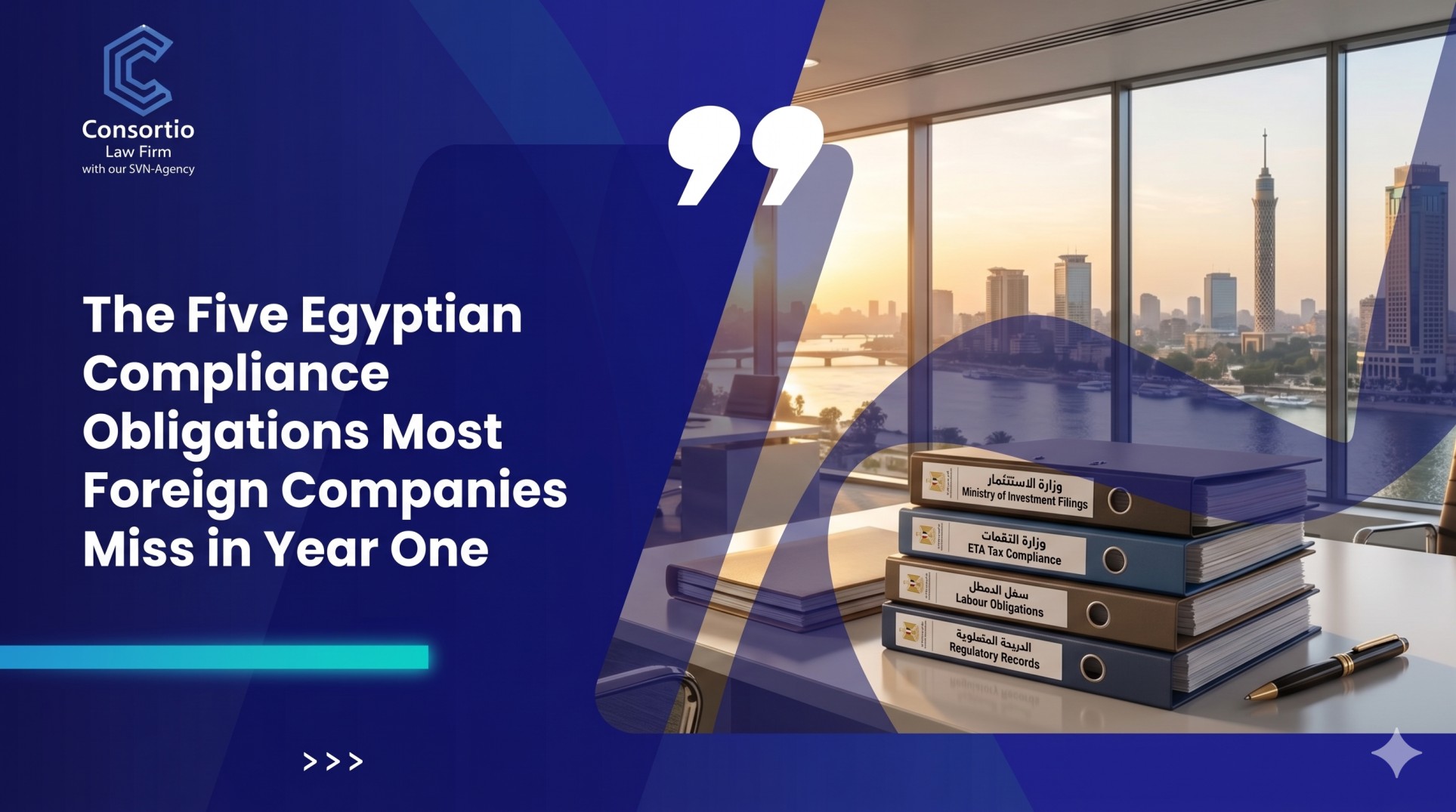
Layer one is general corporate compliance: commercial register maintenance, chamber membership, tax/VAT, social insurance, and baseline labor requirements. Layer two is activity-specific compliance tied to sector regulation and licensing. The correct way to manage layer two is a structured compliance checklist and audit designed for the exact activity.
What are the chamber of commerce obligations?
Many businesses maintain annual chamber subscriptions and pay by the expected deadline to avoid penalties. Branches and relocations can require additional filings. Operationally, it should be treated as a recurring compliance calendar item.
How is the commercial register maintained over time?
Any material change (manager, address, activity, capital, shareholders) should be reflected through the correct corporate resolutions and filings. Commercial register renewals occur periodically, and each branch may have its own renewal cycle. Treat renewals as a separate recurring compliance obligation, not a one-time step.
Can a company change its legal form later (OPC → LLC → JSC)?
Yes. Conversions are possible and usually follow an economic performance evaluation and the required shareholder approvals. The conversion path and valuation method depend on the case. This is commonly used when licensing, investment, or governance needs evolve.
What are the main exit options: liquidation or share sale?
Liquidation is formal and usually more complex than incorporation, involving resolutions, publications, waiting periods, authority clearances, closing approvals, and final deregistration. Share sale can be faster, but procedures vary by legal form: OPC often needs notarized steps, LLC depends on the articles, and JSC involves custodian/broker steps and trading restrictions. In all cases, the ownership change must be properly approved and registered.
Why Consortio: Market Entry Strategy + “Your Safe House”
Consortio does not provide “company formation only.” We design the Market Entry Strategy first—distributor, agent, franchise, license, JV, representative office, branch, or a local company—then build the legal framework and licensing pathway that matches the real model. We use a structured Data Room (templates + guidelines) and a partner ecosystem (auditors, premises solutions, operational setup support) to accelerate execution. After incorporation, we provide compliance checklists and audits (general + activity-specific) and remain a full-service umbrella: contracts, licensing, residency, disputes, litigation, arbitration, and enforcement.
FAQ
Can foreigners own 100% in Egypt?
Yes in most activities, but some sectors impose ownership restrictions or conditions.
Do I need approvals before incorporation?
Only for certain regulated activities; many are licensed after incorporation.
Should I open a representative office first?
Only if you are studying the market and not operating commercially.
Is a Power of Attorney enough to incorporate?
Yes if properly drafted and legalized in the correct sequence.
Is liquidation required to exit?
Not always; share sale may be possible depending on the legal form and restrictions.