For foreign investors, the Egyptian court system—with its multiple tiers of appeal and “Expert Office” delays—can feel like a liability. The solution? Arbitration.
Egypt is a pro-arbitration jurisdiction. It is a signatory to the 1958 New York Convention (via Presidential Decree No. 171 of 1959), and its domestic arbitration law (Law No. 27 of 1994) is modeled almost word-for-word on the UNCITRAL Model Law.
However, “choosing arbitration” is not enough. You must choose the right seat, the right institution, and understand the path to enforcement. At Consortio, we guide you through the “Execution Reality” of arbitrating in Cairo.
The Venue: Why CRCICA?
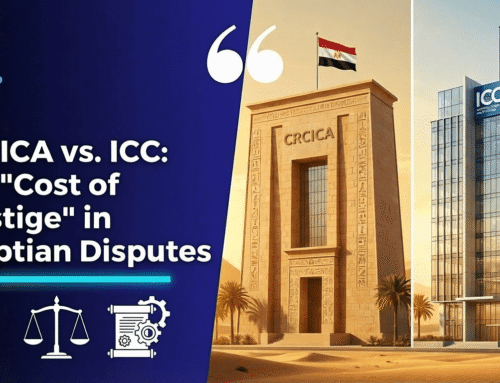
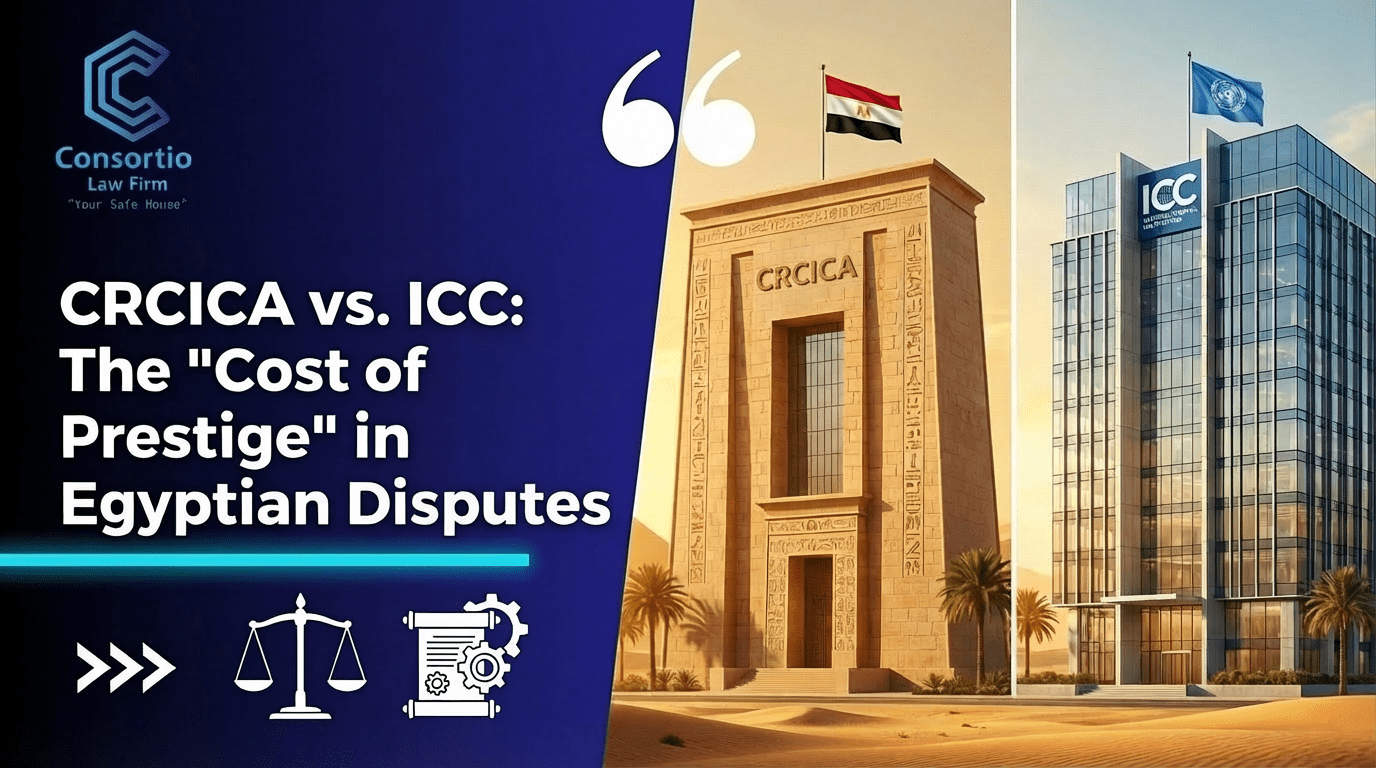
While you can arbitrate in Paris (ICC) or London (LCIA), the Cairo Regional Centre for International Commercial Arbitration (CRCICA) offers a strategic advantage for Egypt-based disputes.
-
Cost Efficiency: Administrative and arbitrator fees are significantly lower than European counterparts.
-
Enforceability: CRCICA awards are treated as domestic awards in Egypt, often simplifying the final execution process.
-
Neutrality: It is an independent international organization, immune from government intervention.
The Law: Your Safety Net (Law No. 27 of 1994)
Egyptian Arbitration Law provides robust protection for foreign parties:
-
Party Autonomy: You are free to choose the language (English is standard), the governing law (English Law, Egyptian Law, etc.), and the number of arbitrators.
-
Limited Judicial Intervention: The courts cannot interfere in the proceedings. There is no “merits appeal”—an arbitral award is final.
The Critical Risk: “Nullity” (Setting Aside the Award)
Since you cannot appeal an award, the losing party has only one weapon left: a Nullity Action (Da’wa Butlan).
-
The Venue: These actions are heard exclusively by the Cairo Court of Appeal (Commercial Circuit).
-
The Grounds: They are strictly limited to procedural errors (e.g., the arbitrator was biased, the party was not notified, or the award violates “Public Policy”).
-
Consortio Insight: We see many awards annulled because of “Public Policy” violations. For example, if an award grants interest rates that violate specific banking regulations, the court may strike it down. Drafting the Terms of Reference correctly is your primary defense.
Enforcement: The “New York Convention” Advantage
Winning the award is Step 1. Getting paid is Step 2. Because Egypt follows the New York Convention, enforcing a foreign arbitral award is generally faster and easier than enforcing a foreign court judgment.
-
No Reciprocity Check: Unlike court judgments, we do not need to prove “reciprocity” for arbitral awards.
-
The Competent Authority: You apply directly to the Cairo Court of Appeal for the exequatur, bypassing the lower courts entirely.
Summary for General Counsels
-
The Clause: Don’t use a generic clause. Specify the Seat (Cairo), the Language (English), and the Number of Arbitrators (Three is safer for complex disputes).
-
The Institution: For Egypt-centric contracts, CRCICA is the gold standard for balancing cost and speed.
-
The Evidence: Arbitration is document-intensive. Ensure your project management team is archiving every email and variation order.